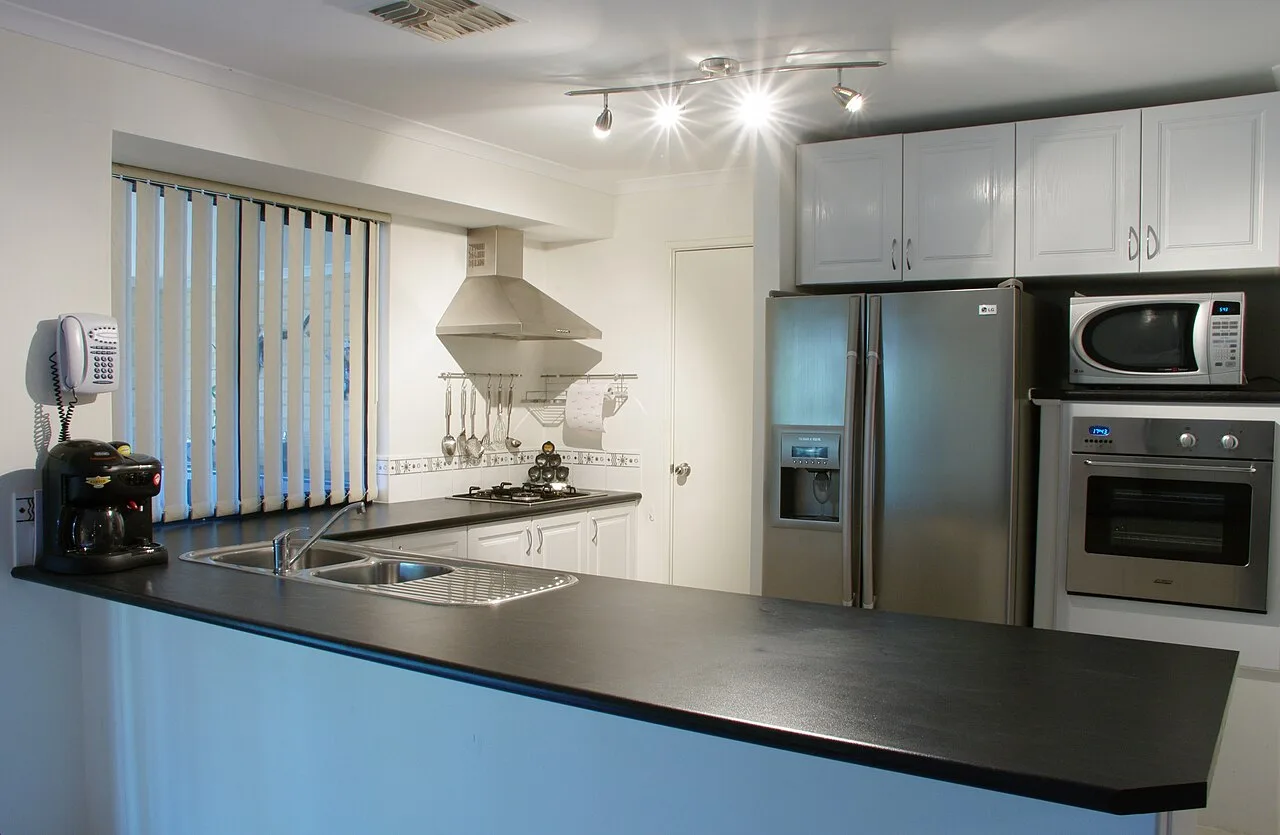
A good extractor hood is essential in any kitchen to remove cooking odors, moisture, and grease particles. When designing an IKEA METOD kitchen, you quickly face a choice: do you opt for a wall-mounted hood, an integrated extractor, a ceiling unit, or a cooktop with built-in extraction?
But even more important than the model is the technology behind it: will you go for ducted extraction to the outside or recirculation? In this article, we explain the pros and cons and provide assembly tips for your IKEA extractor hood.
Ducted Extraction: The Traditional Method
With ducted extraction, cooking air is blown directly outside through a duct system via a hole in the wall or roof.
Pros
- Maximum capacity: Removes not just odors, but also moisture and heat 100% from your home.
- No filter replacement: You only need to clean the metal grease filters regularly (often just in the dishwasher).
- Noise level: Usually quieter because the air faces less resistance than with charcoal filters.
Cons and Assembly Considerations
- Duct required: You need an existing hole to the outside, or you must drill a new one (which is often not permitted by HOAs in apartments).
- Heat loss: In winter, you blow heated air outside, which is less energy-efficient.
- Duct diameter: For modern, powerful extractor hoods, you need a duct with a diameter of at least 150 mm. An old 100 mm duct causes capacity loss and a lot of noise.
[!TIP] Preferably use smooth PVC or spiral ducts. Flexible (corrugated) hoses cause turbulence, which reduces extraction capacity and increases the noise level.
Recirculation: The Modern, Sustainable Choice
With recirculation, the air is drawn in, blown through a grease filter and a charcoal filter (or plasma filter) to neutralize odors, and then blown back clean into the kitchen.
Pros
- Energy-efficient: You do not blow warm air outside (very suitable for new builds with balanced ventilation / heat recovery).
- Flexible placement: Because you don't need a duct to the outside, you have much more freedom in where you place the stove (or kitchen island).
- No demolition work: You don't have to drill holes in facades or roofs.
Cons and Assembly Considerations
- Moisture stays inside: A recirculation hood filters odors, but NOT moisture. You must always ventilate well (e.g., leave a window ajar) to prevent condensation and mold.
- Maintenance costs: You have to replace the charcoal filters regularly (on average every 3 to 6 months, depending on the type) or regenerate them in the oven.
- Installation: Pay close attention to the exhaust opening. With IKEA cabinets, you sometimes have to saw a piece out of the top of the cabinet and install a special ventilation grille so the clean air can flow freely back into the room.
Cooktop with Integrated Extraction (Downdraft)
The current trend is the induction cooktop with integrated extraction (like the IKEA FÖRDELAKTIG). The extractor is in the middle of the cooktop and sucks vapors directly downwards.
- These systems can also work on extraction (to the crawl space or facade) or recirculation.
- Assembly tip: Keep in mind that the motor block and the pipes take up a lot of space in the base cabinet. Often you have to use shallower drawers (e.g., 37 cm instead of 60 cm) for the top drawers.
- With recirculation, ensure the air can leave the plinth (socket) via a ventilation grille; otherwise, the air will inflate the cabinets.
Ducted vs. Recirculation: An Overview
| Feature | Ducted to outside | Recirculation |
|---|---|---|
| Odor removal | Excellent (100% outside) | Good (via charcoal filter) |
| Moisture removal | Yes, complete | No, moisture stays inside |
| Heat loss | Yes, in winter | No, energy-efficient |
| Duct required | Yes (hole in wall/roof) | No |
| Filter maintenance | Clean grease filter | Replace charcoal filter (3–6 months) |
| Placement freedom | Limited (near duct) | Anywhere |
| Noise level | Usually quieter | Slightly louder (more resistance) |
Frequently Asked Questions (FAQ)
What duct diameter do I need for my IKEA extractor hood?
For modern, powerful extractor hoods, you need a duct with a diameter of at least 150 mm. An old 100 mm or 125 mm duct causes capacity loss and a lot of noise. Preferably use smooth PVC or spiral ducts instead of flexible corrugated hoses.
Can I convert a recirculation hood to ducted extraction later?
Yes, often you can, provided you purchase the right parts. You will need to install a duct to the outside and replace the charcoal filter with a duct connection. Check whether your home (or HOA) allows drilling a hole in the facade.
How often should I replace the charcoal filter in my recirculation hood?
On average every 3 to 6 months, depending on the type of filter and how often you cook. Some filters can be regenerated in the oven. Replace the grease filter regularly (often just in the dishwasher).
Need Help with the Installation?
Hanging a heavy extractor hood requires precision and a safe electrical connection. The ducts must connect seamlessly for a quiet result.
Unsure if you can do it yourself? The fitters at Montage Vandaag install IKEA kitchens daily, including all types of extractor hoods. Request a free quote directly for the assembly of your IKEA kitchen!